



30 Jun, 2026
Posted by taslimaakhter
0 comment
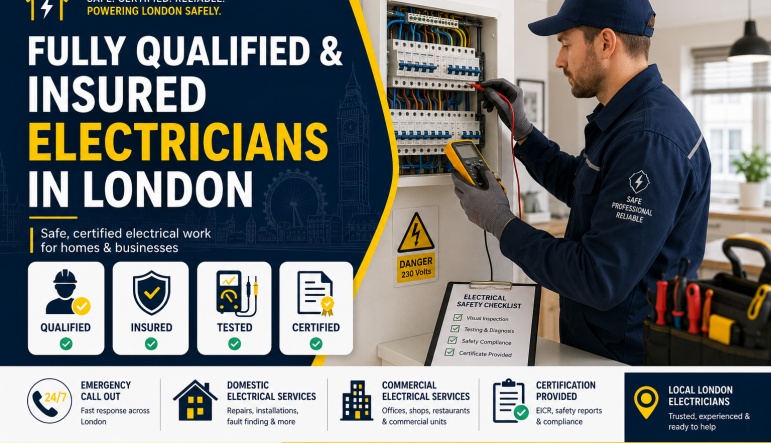
Fully Qualified & Insured Electricians in London: Trusted Local Electrical Services
Electrical work is not something to leave to guesswork. Whether you need a new socket, lighting repair, fuse board upgrade, electrical inspection, or emergency fault finding, hiring fully qualified and insured electricians in London helps protect your home, your family, and your property.
A good electrician does more than fix a visible problem. They check the cause, test the circuit, follow safe working methods, and explain what needs to be done before the work begins. That is why choosing a qualified local electrician matters so much.
In London, electrical problems can happen in all types of properties, from modern flats and rental homes to older houses, offices, shops, and commercial units. Some jobs may look small, but even a small electrical fault can become risky if it is handled incorrectly.
This guide explains why you should choose fully qualified electricians, what insurance means, how to check an electrician is qualified in the UK, and when you should book a registered electrician for electrical work in London.
Why Hiring Fully Qualified and Insured Electricians Matters
Hiring a fully qualified electrician is about safety, compliance, and peace of mind. Electrical work can affect wiring, circuits, appliances, lighting, fuse boards, and the wider safety of a property.
A qualified electrician should understand how to inspect, test, repair, install, and certify electrical work safely. They should also know how to identify hidden problems that may not be obvious to a homeowner or business owner.
Insurance is also important. If something goes wrong during the work, proper insurance gives added protection. Electrical Safety First recommends using registered electricians and notes that registered electricians work to BS 7671, provide safety certificates, are regularly assessed, and are insured.
What Does “Fully Qualified Electrician” Mean in the UK?
A fully qualified electrician in the UK is someone who has completed recognised training, gained practical experience, and has the knowledge to carry out electrical work safely.
For customers, the important point is simple: do not choose someone only because they say they can do the job. Ask for proof of qualification, registration, experience, and insurance.
A qualified electrician should be able to explain the work clearly. They should also understand testing, certification, safe isolation, fault diagnosis, and current wiring standards.
Qualified Electrician vs Registered Electrician
A qualified electrician has training and practical skill. A registered electrician is usually listed with a recognised registration or competent person scheme.
For many customers, a registered electrician gives extra confidence because their work is checked or assessed through a recognised body. Electrical Safety First lists government-approved registering bodies for electricians in England and Wales, including NICEIC, NAPIT, and BFC.
This does not mean every good electrician must be described in the same way. But when choosing an electrician in London, registration, qualification, insurance, and experience are all strong trust signals.
Why Insurance Is Important Before Electrical Work Starts
Insurance protects both the customer and the electrician. Electrical work can involve risk, especially when dealing with older wiring, faulty circuits, consumer units, outdoor electrics, or commercial installations.
An insured electrician shows that they take professional responsibility seriously. Before booking, ask whether the electrician or company has public liability insurance. For larger jobs, commercial properties, or landlord work, insurance details become even more important.
A cheap quote without insurance can become expensive later if something goes wrong.
How to Check an Electrician Is Qualified in the UK
Many people search “how to check an electrician is qualified UK” because they want to avoid unsafe or unprofessional work. The best approach is to ask simple but important questions before booking.
Ask the electrician about their qualifications, registration, insurance, experience with your type of job, and whether they can provide certification where needed.
You can also check whether they are listed with a recognised registration body. For example, NICEIC provides a “Find a trusted tradesperson” option, and its website states that NICEIC-registered electricians are assessed and take part in continuing professional development.
When Should You Hire a Qualified Electrician in London?
You should hire a qualified electrician whenever the job involves wiring, circuits, safety testing, consumer units, electrical faults, or installation work.
Even small electrical jobs should be handled carefully. A loose connection, overloaded circuit, or poor installation can create serious safety issues over time.
Emergency Electrical Problems
Call an electrician quickly if you notice burning smells, repeated tripping, buzzing sounds, damaged sockets, flickering lights, sparks, or power loss in part of the property.
Do not keep resetting a breaker without knowing the cause. Repeated tripping may indicate a deeper fault.
Small Electrical Jobs at Home
Many customers search for “small job electrician near me” because they need help with simple tasks such as replacing a socket, fitting a light, installing a switch, or repairing a minor fault.
Small does not always mean safe for DIY. A qualified local electrician can complete the job properly and check whether the circuit is safe.
Lighting Installation and Repairs
Lighting work may include ceiling lights, spotlights, outdoor lighting, LED upgrades, security lights, garden lights, or commercial lighting.
A qualified electrician can help choose the right fitting, install it safely, and check whether the circuit can support the work.
Fuse Board and Consumer Unit Work
Consumer unit work should always be handled by a qualified electrician. This type of job affects the main electrical safety system of the property.
A proper upgrade may involve inspection, testing, circuit checks, RCD protection, labelling, and certification.
Landlord and Property Electrical Safety Checks
Landlords and property managers often need electrical inspections, repairs, and reports. A qualified electrician can help assess the condition of the installation and identify any safety issues.
For rental properties, electrical safety is not only about fixing faults. It is also about maintaining a safe environment for tenants.
NICEIC Registered Electricians: Why It Builds Trust
Many customers look for NICEIC registered electricians because NICEIC is one of the best-known electrical certification bodies in the UK. NICEIC says it is the UK’s largest certification body for electrical businesses and offers a find-a-tradesperson service for householders and businesses.
However, you should only say a company is NICEIC registered if that is true. If the electrician is not NICEIC registered, they may still be registered with another recognised body, such as NAPIT or another approved scheme.
For service content, the safest wording is:
“Ask whether your electrician is registered with a recognised body such as NICEIC, NAPIT, or another approved scheme.”
Certified Electricians London: What Services Can They Help With?
Certified electricians in London can help with a wide range of domestic and commercial electrical services.
Common services include electrical repairs, lighting installation, socket installation, fault finding, consumer unit upgrades, rewiring, EICR testing, landlord electrical reports, emergency callouts, garden electrics, office electrics, shop electrical work, and general maintenance.
The right electrician depends on the job. A small repair may need a local domestic electrician. A shop, office, or commercial unit may need an electrician with commercial experience.
Domestic Electrical Services in London
Domestic electricians work in homes, flats, apartments, rental properties, and private residential buildings.
They can help with socket repairs, lighting problems, tripping circuits, kitchen electrics, bathroom lighting, fuse board issues, smart home wiring, appliance connection, and general home electrical maintenance.
London homes vary a lot. Some properties have modern wiring, while others may have older systems. A qualified electrician can inspect the condition before recommending a repair or upgrade.
Commercial Electrical Services in London
Commercial electrical work may involve offices, shops, restaurants, salons, warehouses, schools, clinics, and other business premises.
A qualified commercial electrician can help with lighting, power points, distribution boards, emergency lighting, maintenance, testing, and fault repair.
For businesses, safe electrical systems protect staff, customers, equipment, and daily operations.
Why Local London Electricians Are Useful
Hiring a local London electrician can make the process easier. Local electricians understand common property types, access issues, parking challenges, and urgent callout needs across the city.
A local electrician may also respond faster for emergency jobs. This is useful when you have power loss, faulty sockets, lighting failure, or safety concerns.
Searches like “fully qualified and insured electricians near me” or “insured electrician near me” usually come from people who need trusted help quickly. Local availability and clear communication matter.
What to Expect During an Electrician Visit
A professional electrician should first understand the issue. They may ask about the problem, when it started, whether any recent work was done, and whether the issue affects one area or the whole property.
After that, they may inspect the affected circuit, test safely, explain the likely cause, and recommend the next step.
For simple jobs, the repair may be completed in one visit. For larger jobs, the electrician may provide a quote, schedule the work, and explain whether certification is needed.
Questions to Ask Before Booking an Electrician
Before booking, ask:
Are you fully qualified for this type of work?
Can you provide certification where required?
Do you have experience with this type of property?
Is the quote clear?
Do you offer emergency callouts?
These questions help you choose a safer and more reliable electrician.
Common Electrical Jobs That Need a Professional
You should use a professional for consumer unit upgrades, new circuits, rewiring, EICR reports, outdoor electrical work, EV charger wiring, bathroom electrical work, commercial electrical systems, and repeated fault problems.
For small work, professional help is still recommended when you are unsure. Electrical work should never be treated casually.
Red Flags When Choosing an Electrician
Avoid electricians who cannot explain their qualifications, refuse to discuss insurance, give unclear prices, pressure you to book quickly, avoid testing, or say certification is not needed without proper explanation.
Also be careful with very cheap quotes. A low price may not include testing, safe materials, certification, or proper fault diagnosis.
Good electrical work should be safe, tested, and properly explained.
Fully Qualified & Insured Electricians in London: Final Advice
Choosing fully qualified and insured electricians in London is one of the safest decisions you can make for your home or business. A trusted electrician can repair faults, install new fittings, inspect wiring, upgrade consumer units, and help keep your property safe.
Do not choose based on price alone. Check qualification, insurance, registration, experience, and communication.
For small jobs, emergency repairs, landlord checks, or full electrical installations, a qualified and insured electrician gives you better protection and peace of mind.
Book trusted Ideal Electrucians in London today and get professional support from qualified and insured electricians.
Friendly Asked Questions
1. What does fully qualified and insured electrician mean?
It means the electrician has recognised electrical training and practical experience, and they also carry insurance to protect customers and the business during electrical work.
2. How do I check an electrician is qualified in the UK?
Ask for qualification details, registration proof, insurance information, and certification options. You can also check whether they are listed with a recognised electrical registration body.
3. Are NICEIC registered electricians better?
NICEIC registration is a strong trust signal because registered businesses are assessed. However, other recognised registration bodies also exist, so always check the electrician’s actual credentials.
4. Do I need a qualified electrician for small jobs?
Yes, it is safer to use a qualified electrician even for small jobs such as sockets, lights, switches, and minor repairs. Small mistakes can still create safety risks.
5. Can I hire a small job electrician near me in London?
Yes, many local electricians in London handle small jobs such as light fitting, socket repair, switch replacement, and fault checking.
6. Why is electrician insurance important?
Insurance gives added protection if property damage, injury, or an unexpected issue happens during the work. Always ask before booking.
7. What services do certified electricians in London offer?
They may offer repairs, installations, fault finding, consumer unit upgrades, lighting work, rewiring, EICR reports, emergency callouts, and commercial electrical maintenance.
8. Should landlords use qualified electricians?
Yes, landlords should use qualified electricians for inspections, repairs, testing, and electrical safety reports to help maintain safe rental properties.
9. What are signs I need an electrician urgently?
Burning smells, sparks, repeated tripping, buzzing sockets, power loss, flickering lights, or damaged wiring should be checked quickly by a qualified electrician.
10. How do I choose the right electrician in London?
Choose based on qualification, insurance, registration, experience, clear pricing, reviews, communication, and whether they can provide certification where required.
Recent Posts
30 Jun, 2026
Fully Qualified & Insured Electricians in London: Trusted Local Electrical Services
Electrical work is not something to leave to guesswork. Whether you ne
18 Dec, 2023
The Importance of Regular PAT Testing in London for Businesses and Landlords
The Importance of Regular PAT Testing in London for Businesses and Lan